Table of contents
So you want to sign your restaurant up for Uber Eats but don’t know where to start. In the following blog, we’ll break down the simple steps for getting your restaurant registered on the platform, along with other perks of becoming a partner—including promotions, advertising, and the loyalty program. (Expanding to other platforms too? Here’s how to sign up your restaurant on Grubhub as well.)
Given that Uber Eats is already a household name, the third-party app is a great way to bolster your discoverability as a restaurant. Customers tend to stay inside whichever app they already have open, which is the practical argument for being listed on more than one. Being on a second platform is less about reach in general and more about not being invisible to the half of your market that never opens the app you chose.
Learn why your restaurant should be on more than one of the best food delivery apps (even despite the headache of high fees).
Read on to learn how to register your restaurant for Uber Eats!
1. Go to the Uber Eats website and click add your restaurant
2. Fill out your restaurant's information
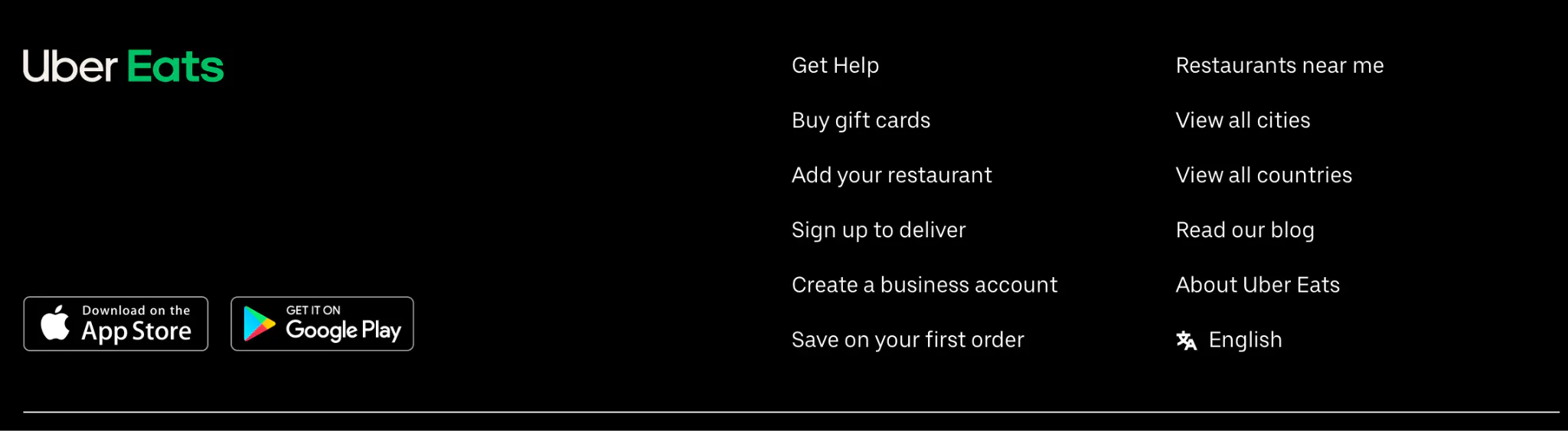
Uber Eats will provide you with the prompts seen in the image below.
Once you’re on the Uber Eats for Restaurants page, fill out your restaurant name, address, name, email, and business type and press submit. Make sure the email address and mobile number are still active or can be contacted. Continue by clicking the Submit button.
While you’re building your online presence, it’s also worth taking a few minutes to create a Google Business Profile for your restaurant.
3. Wait for Uber Eats to contact you to confirm your partnership
After you fill out the form, Uber Eats will contact you and provide you with onboarding information, including a tablet with the online ordering software and a session to guide you through the process. You will also receive pricing and delivery information and logistics based on your restaurant’s size and the number of locations.
What you pay to get started depends on the agreement you sign. Uber Eats does not publish an activation or setup fee on its US pricing page, and onboarding terms, including any hardware or welcome kit, vary by merchant and are worth confirming in writing with your Uber Eats rep before you commit.
As your delivery business grows, a dedicated catering ordering system can also help you layer on larger, higher-margin orders.
Pricing & Fees
Uber Eats charges a percentage of each order rather than a monthly subscription, and the percentage depends on the plan you pick. There are four options, and every one of them also carries a 7% fee on pickup orders.
Plan | Marketplace fee | Pickup fee | Notes |
|---|---|---|---|
Lite | 20% | 7% | Lowest commission, least in-app visibility |
Plus | 25% | 7% | 0% intro rate for the first 30 days |
Premium | 30% | 7% | 0% intro rate for the first 30 days, highest in-app visibility |
Self-delivery | 15% | 7% | You handle the delivery with your own drivers or a partner |
Plus and Premium both start at a 0% intro rate for the first 30 days. The higher tiers buy you visibility in the app and promotional credit rather than a different service, so the question is whether the extra 5 to 10 points of commission return more orders than they cost you. Uber also sells delivery without the marketplace listing through Uber Direct, from $7.99 per delivery, and a Webshop product at 2.5% plus $0.29 per order.
These are the platform’s own published rates, not your effective cost. Once customer-side charges and your own packaging and labor are counted, the share of each order you actually keep is lower. Our breakdown of restaurant delivery app fees walks through the full stack for Uber Eats, DoorDash and Grubhub, and where the room to reduce it usually is.
Complete your restaurant's Uber Eats sign-up!
After looking at the pricing options, take a moment to see which plan is suitable for your restaurant. Signing up for a third-party app is a trade. You gain discoverability with customers who are already searching in the app, and you give up a fifth to a third of every order that comes through it. Whether that trade works depends on how much incremental volume the listing actually brings you, which is worth measuring rather than assuming.
Additionally, even if your restaurant can only swing the Lite plan, there are many ways to rank higher organically—including decreasing prep time, improving ratings, updating hours of operation, offering unique features and investing in the right photos.
After your restaurant is registered with Uber Eats (or most other third-party food delivery services), you can use Otter Order Manager to work every order from one screen instead of one tablet per app, and pair it with commission-free online ordering to build a direct channel alongside the marketplaces.

Book a demo to see every delivery channel running on one system