Table of contents
- What does SOC 2 mean?
- Why is SOC 2 important for restaurant data security?
- What is the difference between SOC 2 Type 1 and Type 2?
- How do you check if a software company is SOC 2 compliant?
- What should you ask a POS or ordering vendor?
- Does SOC 2 replace PCI DSS or guarantee uptime?
- Choose software with evidence your team can use
- Frequently asked questions about why SOC 2 is important
Your restaurant’s data security depends partly on the vendors you connect to your business. The Verizon 2026 Data Breach Investigations Report found that 48% of breaches involved a third party. That is a cross-industry finding, not a restaurant-only rate, but it gives you a reason to look beyond a software demo before sharing guest or business data.
A SOC 2 report helps you assess a service provider’s controls through an independent examination. It gives your team evidence to review, rather than asking you to rely on a security badge. The value depends on what the report covers, when the work was done, and what responsibilities remain with your restaurant.
Key insights
- Use a vendor’s SOC 2 report to review evidence about the service you will use, rather than treating a compliance claim as proof that every product is covered
- A Type 1 report addresses controls at a point in time, while a Type 2 report also examines how controls operated over a stated period
- Check the report’s scope, dates, auditor’s opinion, findings, and customer responsibilities before approving a vendor
- Keep payment security, privacy obligations, outage planning, and your own access controls in the review because SOC 2 does not replace them
What does SOC 2 mean?
SOC stands for System and Organization Controls. In a SOC 2 examination, an independent certified public accountant (CPA) firm reports on a service organization’s system and relevant controls using criteria established by the American Institute of Certified Public Accountants (AICPA).
The report can address security, availability, processing integrity, confidentiality, and privacy. Read its scope to see which categories were included. You should not assume every SOC 2 report addresses all five.
You may see vendors use the phrase “SOC 2 certified.” For your evaluation, ask for the examination report, the service it covers, and the auditor’s opinion. A certificate-style badge gives you much less information than the underlying report.
Why is SOC 2 important for restaurant data security?
SOC 2 gives you a structured way to examine a vendor’s controls before trusting it with part of your operation. The AICPA’s SOC resources explain how these reports support decisions about outsourced services. For your restaurant, the practical value is knowing which questions still need an answer.
Connect the review to the data you share
List what each vendor receives: guest contact details, order information, staff records, or sales reports. Then ask why it needs that data and who can access it. A service that handles guest addresses needs a different discussion from a tool that receives only total daily sales.
When you map your systems, Otter’s overview of restaurant technology solutions can help you separate the jobs performed by ordering, kitchen, and reporting tools.
Give purchasing and IT the same evidence
Your purchasing team may focus on price and rollout, while IT focuses on access and integrations. Put the service name, report period, open questions, and decision owner in one review record. That lets both teams see what has been checked before the contract moves forward.
Spot gaps before adding more locations
Decide which tasks belong to your head office and which belong to each store. For example, name who removes access when a manager leaves and who approves a new connection. Use the same review process when comparing POS systems for multiple locations, alongside menu control, support, and rollout needs.

What is the difference between SOC 2 Type 1 and Type 2?
A Type 1 report addresses the description of the system and the suitability of control design as of a specified date. A Type 2 report also covers operating effectiveness over the period stated in the report.
For a long-term software relationship, the period covered by a Type 2 report gives you evidence about how controls operated during that time. It still does not guarantee future performance. Check the dates and whether the examined service matches the one you plan to buy.
Keep the names separate: SOC 2 is the reporting framework; Type II, also written Type 2, identifies the report type. Calling the whole framework “SOC II” can confuse the two.
How do you check if a software company is SOC 2 compliant?
Request the report through the vendor’s security or sales team, then have the person responsible for security review it. The AICPA’s SOC 2 report review checklist is a useful reference for that work.
1. Match the report to the service
Check the legal entity, system, and services in scope. Compare those names with the product and contract you are reviewing.
Tip: Write down the exact module and integration you need reviewed. A report for another product from the same company may leave your question unanswered.
2. Check the dates and audit firm
Record the report type, examination period or as-of date, and issuing CPA firm. Ask about any gap between the period covered and your planned launch.
Tip: Have your reviewer assess any bridge letter alongside the report. Do not treat an update from vendor management as a new independent audit.
3. Review the categories and opinion
Check which trust services categories are in scope and read the auditor’s opinion. Ask your reviewer to assess any qualification or finding against your planned use.
Tip: List the questions that matter to your restaurant before the meeting. If you need evidence about recovery, ask where the documents address it.
4. Read the findings and follow-up
Review reported testing exceptions and relevant system changes. Ask what the vendor did in response and what evidence supports the answer.
Tip: Record the owner of each unresolved item. A meeting note that says “security reviewed” is less useful than a clear decision with reasons.
5. Identify your own responsibilities
Look for complementary user entity controls, meaning controls the report expects customers to carry out. Also check how other service providers are treated in the report’s scope.
Tip: Turn each responsibility that applies to you into an assigned task. Include store-level work, such as reviewing staff access, in your rollout plan.
6. Agree on the next review
Set a follow-up date based on your risk review and contract. Ask how your team will receive updated documentation and notice of significant service or security changes.
Tip: Keep the approved report, review decision, and follow-up date with the vendor record so a new team member can pick up the work.
What should you ask a POS or ordering vendor?
Bring your actual workflow to the discussion. With a product such as Otter POS, separate the questions about taking orders and payments from the evidence you need about data handling. Product features and security assurance answer different buying questions.
Before rollout, ask:
- Data access: Who can see guest details, exports, and location reports?
- Staff changes: How do you grant, review, and remove access?
- Integrations: What information passes between systems, and who supports each connection?
- Incidents: Who contacts your team, and what does the contract say about notification?
- Recovery: What is the recovery plan, and what should your staff do while a service is unavailable?
Bring your locations, integrations, and security-documentation questions when you discuss your restaurant software needs with Otter.
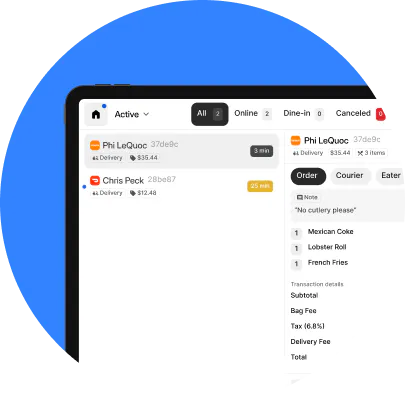
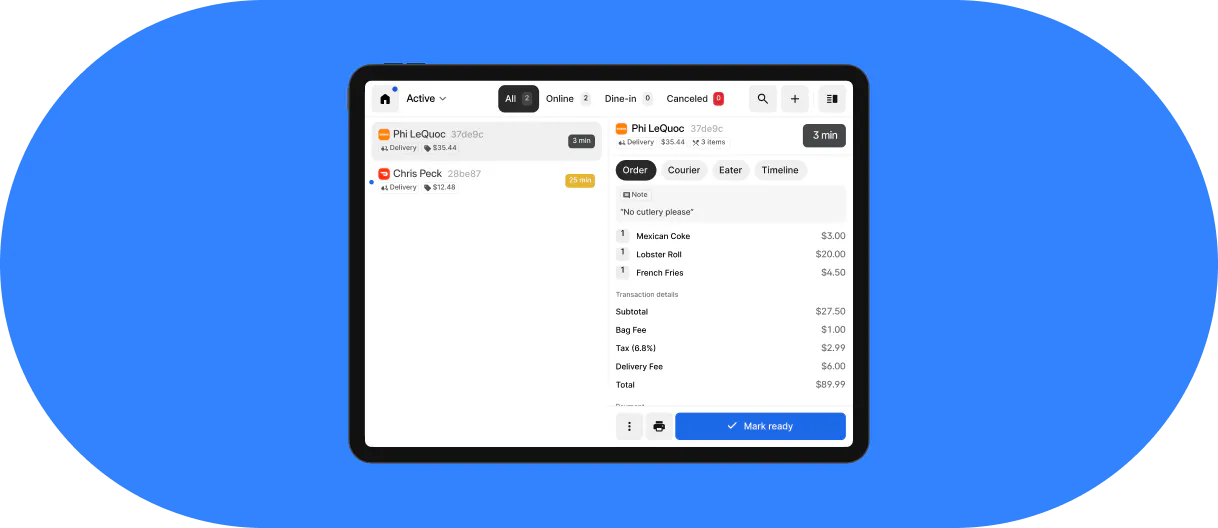
For connected delivery orders, Otter Order Manager consolidates order workflows. Ask which documentation applies to your proposed setup and how your team should handle a disrupted connection. The same operational questions belong in any comparison of restaurant ordering systems.

Does SOC 2 replace PCI DSS or guarantee uptime?
No. A SOC 2 report is one part of vendor review. It does not establish that your entire restaurant setup meets every payment or privacy requirement, and it is not a promise that a service will never fail.
Payment security needs a separate check
The Payment Card Industry Data Security Standard (PCI DSS) addresses protection of payment account data. The PCI Security Standards Council explains that a SOC 2 assessment cannot substitute for a PCI DSS assessment. Ask your payment provider or assessor what evidence applies to your environment.
Availability needs a working plan
Ask about service commitments, recovery procedures, and your staff’s fallback workflow. Test what happens when a connection fails before your busiest service. A vendor report and your own continuity plan serve different purposes.
Your restaurant still needs access controls
Keep a named owner for staff permissions and vendor connections. Review access after role changes and confirm how to remove it when someone leaves. Apply the controls your team agreed to during vendor review.
Choose software with evidence your team can use
SOC 2 is valuable when it helps you make a specific decision: whether the examined service and controls fit the work you plan to trust to a vendor. Ask for the right report, involve your security reviewer, and assign the tasks that stay with your restaurant.
Frequently asked questions about why SOC 2 is important
Is SOC 2 a certification?
SOC 2 is an independent examination and reporting framework, rather than a product certification. Although “SOC 2 certified” is common marketing language, the report is what your team should review. Check the system covered, dates, and auditor’s opinion.
Does a SOC 2 report need to cover all five categories?
Do not assume that a report covers security, availability, processing integrity, confidentiality, and privacy together. Review the categories in scope and decide whether they address your needs. Ask for further evidence where your planned use raises questions outside that scope.
Does SOC 2 guarantee that a vendor will not have a breach?
No report can guarantee that a vendor will never have a breach or outage. A SOC 2 report gives you evidence about a defined system and examination date or period. Use it alongside other security and operational checks.
How often should you review a vendor’s SOC 2 report?
Set the review schedule according to the importance of the service, your risk policy, and the contract. Check the period covered and ask about changes since it ended. Revisit the review when you add a service or materially change the data you share.
How should you verify Otter’s SOC 2 status?
Ask Otter’s team for current security documentation covering the services you plan to use. If a SOC 2 report is available, have your reviewer confirm its scope, period, and findings. Do not rely on a similarly named company’s documentation or a general marketing statement.
Does your restaurant need its own SOC 2 report?
Evaluating a software vendor’s report is a different question from whether your own organization should undergo an examination. That decision depends on the services you provide and your customers’ or contractual requirements. Review your own responsibilities separately with the people who handle security and compliance for your business.

Book a demo to see how Otter’s all-in-one platform can help your restaurant thrive.